holistic [həʊˈlɪstɪk]: characterized by the belief that the parts of something are intimately interconnected and explicable only by reference to the whole (Oxford English Dictionary)
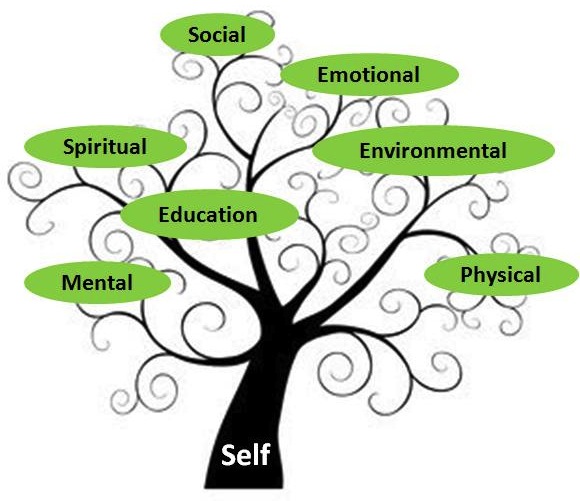 The most transformative educators have a deep concern for the lives of their students and their development as a whole. They understand that a student is not just a brain but a person: a heart, a body, a mind, and the constantly recalculating sum of his or her growing experiences. Therefore, being committed to a student’s academic development means seeing education as one part of a big picture. It means maintaining awareness of things like confidence level, motivation, and self-image in addition to intellectual ability. It means that getting to know your child as a person – learning how he or she approaches challenges, interacts with others, and handles failures and successes in other areas of life – is very important to me.
Playing the Role of Mirror: Big Picture Ideas
I have extensive experience working with all sorts of students, from those operating at an advanced pace to those facing learning disabilities or emotional challenges. My interaction with your child from the first moment we meet is fueled by the assumption that he or she is already talented in a variety of ways regardless of their history, level of achievement, or state of being. My job is to help gauge and develop those talents, and to deepen his or her sense of confidence and what it means to be a student, a thinker, a writer, a communicator, and a human being. To do this, I strive to play the role of mirror, providing your child with opportunities to (a) get to know himself, (b) assess his own weaknesses and strengths, and to (c) discover that, so very often, the ability to make a correct or valuable decision already lies within.
To achieve this, I place as much value on the journey as the destination. One way for a tutor to help a student derive rewards from the process of an assignment while remaining focused on its goals is to ask questions instead of being a source of instant assessment. I call this the “wall vs. door” philosophy. It means cultivating in your child the ability and willingness to honestly and productively self-assess.
For instance, while reviewing the structure of his or her essay, I could inform your son or daughter, “I don’t understand how this point connects to your thesis.”
Alternatively, I could ask, “Do you think your reader will understand how this point connects to your thesis?”
Consider: What thoughts does the question have the potential to generate in your child that the statement might not? What abilities does the question have the potential to develop?
Consider: Which approach is intended to make a better piece of writing, and which is intended to make a better writer?
To help your child reach for excellence, I look at each assignment not just as a chance to raise a GPA but also as a fertile opportunity for development. It is my responsibility to remain patient, to build doors to open, and to construct places of challenge. I strive to constantly provide them with positive ways of envisioning themselves and their ever-expanding abilities.
And I share with my students my love of weaknesses. Strengths are something to build upon. Strengths are wonderful. But weaknesses, to me, are more valuable (and more fun) because they can become opportunities for greatness.
This proven approach enables your child to develop internal motivation. You will find them pushing themselves to exceed expectations, becoming more open-minded, and engaging with their assignments and tasks in a manner that demonstrates self-motivation and genuine interest – attitudes that very often spread to other areas of their lives.
Creativity: Important or the Most Important?
Some view academic work as the opposite of a creative endeavor. However, there is an English-department expression that the best teachers know to be true: “All writing is creative writing.”
Whether your child is working on a research project, a persuasive essay, a history or social studies paper, a presentation or speech, a college entrance statement, or even a scientific lab report, creativity – defined by the Oxford English Dictionary as “the use of imagination or original ideas” – is involved at every turn! After all, creative thinking is required to:
- Imagine possible outcomes
- Make choices
- Take risks
- Solve problems
These acts come into play during any academic task, whether a student is deciding how to best phrase a compelling argument, structure a report, provide feedback to a classmate, or present an analysis. They are also fundamental in learning how to prioritize tasks, how to best manage time, and even how to study most effectively for a test.
In our contemporary world, originality is highly prized. Innovative thinkers and confident problem-solvers are often the leaders of their fields and industries. They are the ones who move the “cutting-edge” forward and establish improved methods and new benchmarks. Therefore, your child’s creative, independent spirit is a characteristic I value highly and something I will encourage him to nurture during our time together and throughout his life.
Grammar and Mechanics: A Path to Better Grades and a Better Life
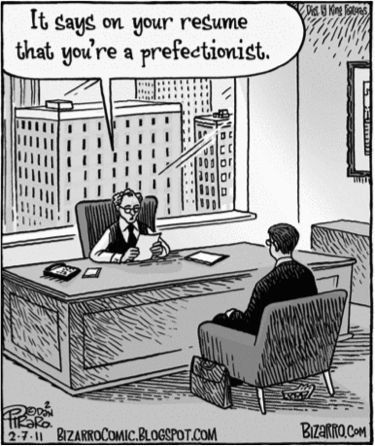 The quality of writing that we present to the world – in everything from a formal school essay to a simple email to a teacher – is always an extension and a representation of us. Ideas are minted in our minds, translated into words, and delivered to our readers via pen, keyboard, etc. The ideas we share are a part of us. If we have not edited for things like grammar, spelling, mechanics, and clarity, our readers can receive the damaging message that we do not care much about our ideas. And as we know, others usually show us the level of respect we show ourselves. For instance, trying to read an essay that is embedded with numerous errors, typos, and spelling mistakes is like trying to crawl through a canyon of sharp boulders. Your child’s teacher may take his ideas less seriously if presented in a careless package, and certainly others in the “real world” – employers, colleagues, etc. – will.
Demonstrating a strong command of written language and a detail-oriented approach when it comes to any sort of communication or expression is an important way to show the world that we take pride in ourselves. My lessons are infused with this perspective. I encourage students to consider for themselves what grammar and mechanics say about them, and how the amount of effort they put into self-presentation very often determines what they get out of any given situation.
The problem often starts in the early grades when teachers “agree” with students that, “Yes, grammar and mechanics are boring!” My solution is to reposition these devices in the student’s mind as tools in a very important tool-belt. I propose to my students that grammar is in fact something for them to “take back”, to repossess, an exciting mechanism of great power they can wield to express exactly what they want to say in exactly the way they want to say it. We discuss remaining conscious of target audience, passive and active voice, tone, phrasing, and diction, and they see for themselves how the very choice and order of words and punctuation in a sentence can suppress or spark a reaction inside their reader.
At the Root
One’s teaching philosophy is a mirror of one’s life philosophy and view of the world. I believe that human beings have a moral obligation to help each other and to repair the world. Out of all of our social institutions – family, religion, law, media, politics, economy and others – I believe that education can and should play the most important and strategic role in building societies in which people with diverse histories, biographies and attributes can live together productively and peacefully. My commitment to your child’s education is my commitment to this vision.
Therefore, I strive to offer my students only my best; likewise, it is the only thing I will expect from them.
 Lisa Gratz